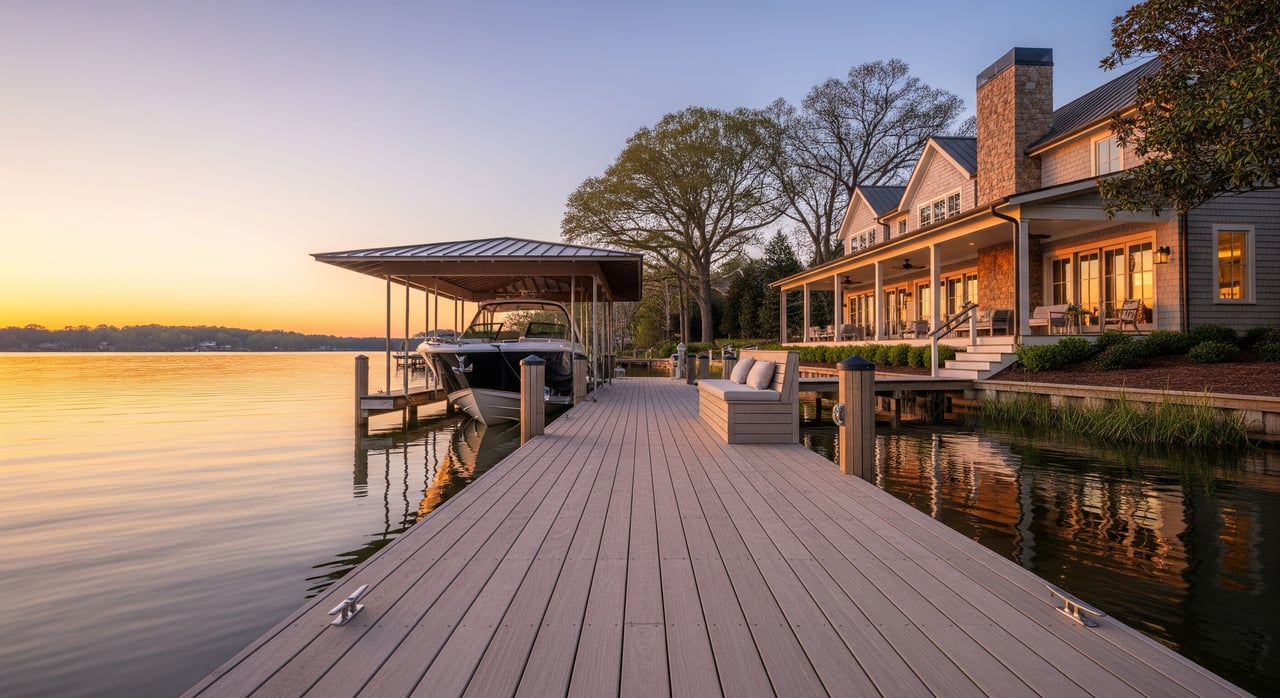
Love the idea of hopping on your boat from your backyard and cruising to dinner at sunset? On Lake Wylie’s York County shoreline, that dream is attainable if you plan the details the right way. You want access that fits your lifestyle, clear rules for docks and lifts, and simple steps to keep your boat ready year-round. This guide shows you how to align the boating life you want with the property, permits, and services that make it work. Let’s dive in.
What the Lake Wylie boating life really looks like
Your daily boating rhythm starts with access. Some owners step onto a private dock. Others keep a slip at a marina or use public ramps with a trailer. Each path works, but the best choice depends on your usage, budget, and comfort with maintenance.
On Lake Wylie, shoreline structures are managed by Duke Energy in coordination with local rules. That means docks, lifts, and shoreline work usually need approvals. Neighborhood HOA rules often add another layer. A little homework upfront saves time and surprises later.
Choose your access: dock, marina, or club
Private dock at home
A private dock offers unmatched convenience. Before you count on it, verify the essentials:
- Confirm riparian rights or a recorded easement in the deed. “Waterfront” can mean different things.
- Check Duke Energy shoreline policies, York County permits, and your HOA’s architectural guidelines. Some projects may also require U.S. Army Corps of Engineers permits.
- Measure water depth at the end of the dock across seasons and note exposure to wind and boat traffic.
- Review the dock’s condition, electrical service, and any existing lift maintenance records.
Private docks work best if you boat often and value instant access. Expect ongoing upkeep and inspections.
Marina slip
A marina slip cuts down on at-home maintenance and often adds services:
- Ask about waitlists, average wait time, and whether slips can transfer with a property.
- Confirm slip dimensions, weight limits, power availability, and security.
- Compare fees for slips, utilities, and storage. Ask about fuel hours, pump-out, and on-site mechanical help.
- Learn guest policies, transient slips, and rules during peak weekends.
This is a smart pick if you want convenience, professional maintenance options, and a social hub on the water.
Public ramps and trailering
Trailering gives you flexibility and lower ongoing costs. It helps to plan around crowds in peak season:
- Identify the most convenient public launches for your home base.
- Scout parking capacity, traffic patterns, and holiday congestion.
- Check HOA or county rules for trailer storage at home or near your property.
Trailering suits part-time boaters or buyers without riparian rights who still want regular lake time.
Boat clubs and share programs
Membership boat clubs let you reserve and use boats without owning one. You trade ownership tasks for scheduled access and set fees. This model fits occasional boaters or households testing the lifestyle before buying.
Must-check waterfront features
If you are shopping for a waterfront home on Lake Wylie’s York County side, put these items at the top of your list:
- Riparian rights or easement. Verify in the deed and recorded documents.
- Dock type and condition. Look at piling integrity, decking materials, fasteners, and floatation.
- Water depth and seasonal usability. Measure depth where you plan to berth your boat and review lake level patterns.
- Orientation and exposure. Protected coves handle wake and wind better than open, high-traffic channels.
- Shoreline substrate and stability. Rock, rip-rap, or eroding banks affect anchoring and long-term maintenance.
A qualified marine contractor or inspector can provide a clear report on structure and safety.
Boat lifts and dock power
The right lift protects your boat and smooths day-to-day use:
- Lift types. Common options include vertical, hydraulic, and cantilever lifts. Match capacity to your boat’s weight, beam, and hull.
- Clearance. Make sure air draft and tower height work with your lift and dock roofline.
- Power. Confirm safe, adequate electrical service for lift motors and controls.
- Maintenance. Ask for age, service records, and recent inspections for cables, motors, and pilings.
If a lift is not installed, factor in purchase, installation, and any needed electrical work after you secure permits and approvals.
Storage and maintenance choices
You have several paths if you prefer not to keep the boat at your dock:
- Dry-stack storage. Indoor or outdoor racks protect from the elements and streamline launching.
- Wet slips. Rent at a marina for convenience and access to fueling, pump-out, and maintenance.
- Trailer storage. Keep the boat mobile, but confirm HOA and county rules for on-site parking or off-site facilities.
Ask about winterizing, shrink-wrapping, and service scheduling well before the off-season.
Permits, HOAs, and rules to know
Lake Wylie’s shoreline is managed by Duke Energy. Docks, lifts, and shoreline work typically require their permissions and often county permits as well.
- Duke Energy shoreline management. Expect guidelines for docks, piers, ramps, and vegetation.
- York County rules. Local codes and zoning can add permit steps, septic setbacks, and erosion control requirements.
- HOA oversight. Many neighborhoods set dock size limits, lift types, trailer storage rules, guest mooring policies, and materials standards.
- USACE. Federal permits may apply to structures in navigable waters in some situations.
- Boating safety and zones. No-wake zones, speed limits, and enforcement come from state and local authorities, especially near marinas and narrow channels.
- Fueling and waste. Use designated pump-out services and follow spill prevention protocols.
Request all existing permits and approvals during due diligence and before you plan upgrades.
Costs to plan for
Exact numbers vary, but most buyers on Lake Wylie budget for the categories below:
- Dock construction or repair. Based on size, materials, permitting, and exposure.
- Lift purchase and installation. Depends on capacity, type, and electrical or piling work.
- Slip and storage fees. Marina charges for wet slips, dry stack, utilities, and services.
- Insurance. Boat hull coverage and liability, plus dock or lift coverage under homeowners or a separate policy.
- HOA dues. Community dock maintenance or shoreline projects may be included.
A realistic budget helps you choose the right access model and avoid surprise expenses.
A simple buyer checklist
Use this step-by-step path to evaluate a property’s boating fit:
- Deed review. Confirm riparian rights or easements using the deed and plat.
- Permits and approvals. Ask for Duke Energy, York County, HOA, and any USACE documentation on existing docks and lifts.
- Depth and access. Measure depth at the dock end and confirm clearance for your boat type.
- Professional inspection. Hire a marine contractor or licensed inspector for structure, electrical, and lift equipment.
- HOA documents. Read covenants, dock rules, meeting minutes, and planned capital projects.
- Insurance check. Confirm coverage for the home, dock, lift, and boat. Ask marinas about slip insurance requirements.
- Exposure and traffic. Note wind, wake, and nearby boat traffic patterns.
- Marina and ramp access. Map your closest options and ask about waitlists and peak congestion.
- Utilities and services. Confirm dock electrical capacity, lighting, and nearby pump-out options.
- Flood and erosion. Review flood maps, shoreline stability, and any past stabilization work.
Life on the water: day-to-day realities
The best fit balances fun and upkeep. Frequent boaters often prefer a private dock or marina valet services to make spontaneous trips easy. Less frequent boaters may lean toward dry stack or a boat club.
Consider noise and wake if the property sits near active channels. A sheltered cove tends to be calmer. Plan for guest parking and easy access for friends who bring a trailer on busy weekends.
Next steps
Lake Wylie offers a flexible boating lifestyle on the York County side, from private docks to full-service marinas and simple club access. If you want to connect your day-to-day routine to the right shoreline rules, permits, and property features, start early and line up the documents, inspections, and storage plan that match your goals.
If you are weighing neighborhoods, HOA rules, or dock setups, reach out for local guidance and a short list of homes that fit your boating style. Connect with John Bolin to get expert help on the York County and Lake Wylie market.
FAQs
Can I build a private dock on Lake Wylie’s York County side?
- Not automatically. Confirm deeded riparian rights, then secure Duke Energy shoreline permissions, York County permits, and any required HOA or federal approvals.
How do I know if a dock is usable year-round on Lake Wylie?
- Measure water depth at the dock across seasons, review lake level patterns, check wind and traffic exposure, and inspect the dock’s structural condition.
What should I inspect on an existing dock or boat lift before buying?
- Review piling condition, decking, fasteners, lift motors and cables, electrical wiring, and visible permits or approvals; use a qualified marine inspector.
Are there restrictions on boat size or type on Lake Wylie?
- Often yes. HOAs and marinas commonly set limits on vessel size and types, and local authorities regulate no-wake zones and navigation in narrow channels.
Where do owners store boats in winter if they live on Lake Wylie?
- Options include marina wet slips, dry-stack storage, off-site facilities, or private trailer storage if allowed by HOA and local rules.
What ongoing costs should I budget for with a Lake Wylie home and boat?
- Plan for dock and lift maintenance, electricity at the dock, marina or storage fees, boat insurance, HOA dues, and possibly higher homeowners premiums in certain zones.